
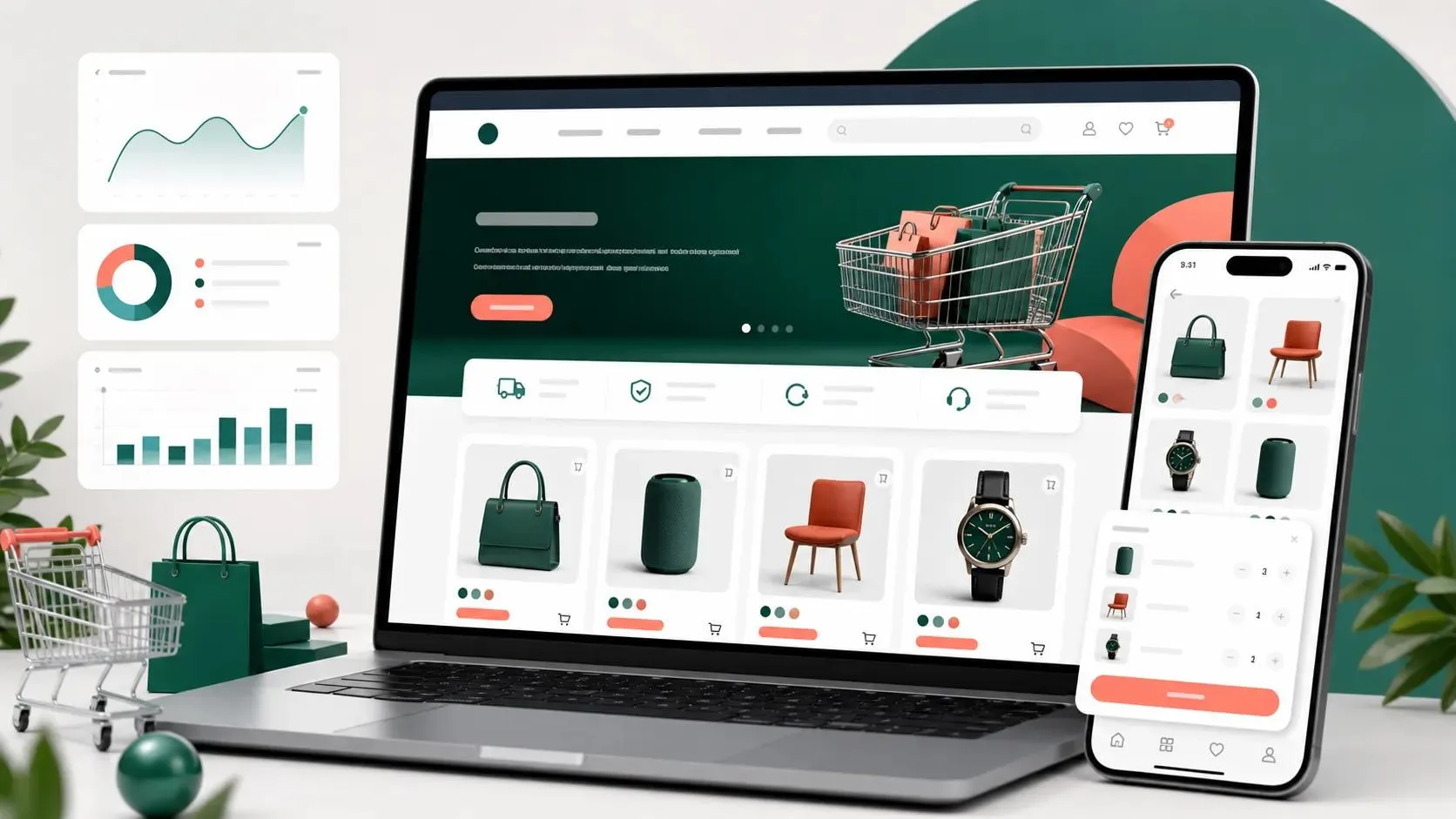
eCommerce Website Development in Delhi NCR: Features, Cost & Benefits for Businesses in 2026
The way people shop has changed significantly. Today, customers can discover products, compare prices, read product information, and place orders online without visiting a physical store.
For businesses, this creates an opportunity to reach customers beyond their local market and sell products through their own online stores.
Whether you sell clothing, footwear, electronics, furniture, cosmetics, accessories, home decor, or other products, an eCommerce website can help you establish an online shopping platform for your business.
If you are planning to start selling products online, choosing the right eCommerce website development solution is an important first step.
In this guide, we will explain the essential features of an eCommerce website, development platforms, payment gateway integration, website costs, SEO requirements, and how to choose the right development company in Delhi NCR.
1. What Is eCommerce Website Development?
eCommerce website development is the process of designing and building an online store where businesses can display products, accept orders, process payments, and manage customer purchases.
An eCommerce website generally includes:
- Product categories.
- Product listings.
- Product detail pages.
- Shopping cart.
- Customer registration and login.
- Checkout system.
- Payment gateway integration.
- Order management.
- Shipping and delivery information.
- Customer support options.
Unlike a basic business website, an online store requires additional functionality to manage products, orders, payments, customers, and inventory.
The exact features depend on the business model and its operational requirements.
2. Why Does Your Business Need an eCommerce Website?
If you currently sell products through a physical store, social media, or messaging applications, developing your own online store may help you organise your online sales process.
Here are some important benefits.
Sell Products Online
Customers can browse your product catalogue and place orders through your website.
Reach More Customers
Your online store can make your products accessible to customers outside your immediate business location, depending on your shipping arrangements.
Build Your Own Brand Identity
A dedicated website allows you to present your products, brand story, policies, and customer support information in one place.
Manage Products and Orders
An eCommerce administration panel can help you manage product information, inventory, customer orders, and order status.
Provide a Convenient Shopping Experience
Customers can browse products, review prices, select variations, add items to their cart, and complete checkout through one platform.
Support Digital Marketing
Your product and category pages can be promoted through search engines, social media, email campaigns, and other marketing channels.
An eCommerce website does not automatically generate sales. Product quality, pricing, customer experience, marketing, competition, and fulfilment all influence business results.
3. Essential Features of a Professional eCommerce Website
A successful online store should make it easy for customers to find products and complete purchases.
The following features are important for many eCommerce businesses.
Product Catalogue
Display products with clear names, descriptions, prices, photographs, and relevant details.
Product Categories and Filters
Organise products into categories so customers can browse the catalogue more easily.
Filters may include:
- Price range.
- Brand.
- Size.
- Colour.
- Product type.
- Availability.
Product Detail Pages
Each product page should provide useful information such as:
- Product name.
- Product photographs.
- Price.
- Product description.
- Available variations.
- Specifications.
- Stock availability.
- Delivery information.
Shopping Cart
Customers should be able to add products, update quantities, remove items, and review their order before checkout.
Secure Checkout
A simple checkout process should collect the necessary delivery and order information without unnecessary steps.
Customer Registration and Login
Depending on the business model, customers may create accounts to review orders, manage addresses, and access account information.
Order Management
The administration panel should allow authorised staff to view orders, update order statuses, and manage fulfilment.
Inventory Management
Inventory features help businesses monitor stock availability and reduce problems caused by incorrect product availability information.
Coupons and Discounts
Promotional codes and discount features can support sales campaigns when used appropriately.
Customer Reviews
Genuine product reviews can help shoppers understand other customers’ experiences.
4. Payment Gateway Integration for Online Stores
Payment integration is an important part of eCommerce website development.
Customers should have access to convenient and reliable payment options supported by the business.
Common payment methods in India include:
- UPI.
- Debit cards.
- Credit cards.
- Net banking.
- Supported digital wallets.
- Cash on Delivery, where operationally suitable.
Payment gateway providers process online transactions between customers and merchants.
Before selecting a payment gateway, consider:
- Supported payment methods.
- Transaction charges.
- Settlement timelines.
- Refund functionality.
- Integration requirements.
- Security and compliance requirements.
- Customer support.
The payment gateway account and merchant verification process are generally separate from website development.
A development company can help with technical integration, while the business owner must complete the payment provider’s required onboarding and verification.
5. Shipping and Delivery Integration
For businesses selling physical products, shipping management is an important part of the online shopping experience.
An eCommerce website may include:
- Delivery address management.
- Shipping charges.
- Pincode serviceability checks.
- Order tracking.
- Shipping label generation.
- Courier integration.
- Delivery status updates.
- Return and exchange workflows.
The right integration depends on the shipping provider and the business’s fulfilment process.
Before development begins, decide how orders will be packed, dispatched, tracked, and delivered.
6. Which Platform Is Best for eCommerce Website Development?
The right platform depends on your product catalogue, budget, technical requirements, and future business plans.
WooCommerce
WooCommerce is an eCommerce solution built for WordPress.
It can be suitable for small and medium-sized businesses that want control over their website and store management.
Important advantages include:
- Flexible product management.
- WordPress content management.
- Extensions for additional functionality.
- Payment and shipping integrations.
- Customisable store design.
- Product and category SEO options.
Shopify
Shopify is a hosted eCommerce platform that provides store management tools and an ecosystem of themes and apps.
It may suit businesses that prefer a managed platform and want to launch an online store without managing their own server infrastructure.
Consider subscription charges, app costs, payment options, and platform requirements before choosing it.
Custom eCommerce Development
Custom development may be appropriate for businesses that need specialised features or workflows.
Examples include:
- Multi-vendor marketplaces.
- Custom product configurators.
- Special pricing systems.
- Complex inventory workflows.
- ERP or CRM integrations.
- Advanced reporting dashboards.
- Business-specific order management.
Custom solutions require more planning, development, testing, and ongoing technical support.
7. How Much Does eCommerce Website Development Cost in Delhi NCR?
The cost of developing an online store depends on its design, number of products, functionality, integrations, platform, and project complexity.
A basic online store has different requirements from a large eCommerce platform with advanced inventory and business integrations.
The following factors influence development costs:
| Factor | How It Affects Cost |
|---|---|
| Website Design | Custom layouts and advanced visual design |
| Product Catalogue | Number of products and product variations |
| Payment Gateway | Integration and testing requirements |
| Shipping Integration | Courier and delivery workflow |
| Custom Features | Special business functionality |
| SEO Setup | Technical and on-page SEO requirements |
| Third-Party Tools | Paid themes, plugins, and subscriptions |
| Maintenance | Ongoing support, updates, and monitoring |
Before approving a quotation, ask for a written breakdown covering:
- Design and development.
- Number of pages and templates.
- Product upload responsibilities.
- Payment gateway integration.
- Shipping integration.
- Domain and hosting.
- SSL configuration.
- Third-party licence costs.
- Testing and launch.
- Maintenance and support.
Do not compare companies only by their quoted price. Compare the actual functionality, ownership terms, support, and delivery scope.
8. Mobile-Friendly eCommerce Website Design
Many customers use mobile phones to browse products and place online orders.
A mobile-friendly store is therefore essential.
Your eCommerce website should provide:
- Responsive layouts.
- Easy product browsing.
- Readable product descriptions.
- Clear product photographs.
- Mobile-friendly navigation.
- Simple cart functionality.
- Easy checkout.
- Visible contact and support information.
Test the complete buying process on different mobile devices, not just the homepage.
Pay particular attention to product variations, cart updates, payment steps, and order confirmation.
9. eCommerce Website SEO: How to Improve Online Visibility
Search engine optimisation can help potential customers discover your products through relevant searches.
Important eCommerce SEO practices include:
Optimise Product Page Titles
Write unique and descriptive titles that explain the product.
Write Useful Product Descriptions
Provide original product descriptions with accurate features, specifications, materials, sizes, and other relevant details.
Optimise Product Images
Use descriptive image filenames, appropriate image formats, and meaningful alt text.
Create SEO-Friendly URLs
Use clear and readable URLs for product and category pages.
Optimise Category Pages
Category pages should include useful introductory content and organised product listings.
Use Internal Linking
Connect related products, categories, and useful blog articles.
Implement Structured Data Where Appropriate
Relevant product structured data can help search engines understand product information. Ensure the data accurately reflects the visible page content.
Improve Website Performance
Optimise images, reduce unnecessary scripts, and use suitable hosting.
SEO is an ongoing process. Publishing an online store does not guarantee immediate Google rankings or sales.
10. Important Security Features for an eCommerce Website
An online store handles customer information and may process payments, so security should be considered from the beginning.
Important security practices include:
- HTTPS and SSL configuration.
- Secure administrator accounts.
- Strong passwords.
- Regular website backups.
- Software and plugin updates.
- Appropriate access permissions.
- Spam protection.
- Secure integration with payment providers.
- Monitoring for suspicious activity.
- A clear privacy policy.
Avoid storing sensitive payment card details directly on your website unless you have the required compliant infrastructure. Use appropriate payment gateway solutions.
Also ensure your website’s privacy, refund, shipping, and terms policies accurately describe your business practices.
11. Important Pages Every Online Store Should Have
A professional eCommerce website should provide customers with the information they need before placing an order.
Important pages include:
Home Page: Introduces the brand and highlights important product categories.
Shop Page: Displays the complete product catalogue.
Category Pages: Organise products into relevant groups.
Product Pages: Provide photographs, descriptions, prices, and product details.
About Us: Explains the business and its brand identity.
Contact Us: Provides customer support and contact information.
Shipping Policy: Explains delivery charges, timelines, and shipping conditions.
Return and Refund Policy: Clearly explains return, replacement, and refund conditions.
Privacy Policy: Describes how customer information is collected and used.
Terms and Conditions: Explains the terms governing website use and purchases.
These pages help customers understand the store’s policies and purchasing process.
12. How to Choose the Right eCommerce Website Development Company
Choosing the right development partner can influence the quality, functionality, and long-term maintenance of your online store.
Before hiring a company in Delhi NCR, consider the following.
Check the Portfolio
Ask for examples of eCommerce stores the company has developed.
Understand the Platform
Ask whether WooCommerce, Shopify, or custom development is suitable for your requirements.
Review the Features
Confirm that product management, checkout, payments, and shipping requirements are covered.
Check Mobile Responsiveness
Review the actual store on smartphones and tablets.
Discuss SEO
Understand what technical and on-page SEO work is included.
Confirm Website Ownership
Make sure you understand who controls the domain, hosting, website files, and administrator accounts.
Discuss Future Support
Ask about backups, security, updates, troubleshooting, and additional feature development.
Get a Written Quotation
The project scope, payment terms, delivery milestones, and maintenance arrangements should be documented.
13. Common eCommerce Website Development Mistakes to Avoid
Businesses sometimes focus only on launching their online store and overlook important details.
Avoid these common mistakes:
Poor Product Photography: Unclear images make it difficult for customers to understand the products.
Incomplete Product Descriptions: Missing specifications, sizes, materials, or other important details can create confusion.
Complicated Checkout: Unnecessary checkout steps can make purchasing difficult.
Ignoring Mobile Users: A store that does not work properly on smartphones can create a poor shopping experience.
Unclear Return Policies: Customers should understand the return and refund conditions before placing an order.
Incorrect Stock Information: Inventory should be updated to avoid accepting orders for unavailable products.
Ignoring Website Security: Regular updates, backups, and security checks are important.
Not Testing Payments: Test the complete payment and order-confirmation process before launch.
Ignoring Website Maintenance: An online store needs ongoing technical attention after delivery.
14. eCommerce Website Development Process
A structured development process helps businesses understand what happens during an online store project.
Step 1: Requirement Discussion
Understand the products, business model, target audience, and required features.
Step 2: Platform Selection
Choose WooCommerce, Shopify, or custom development according to the project requirements.
Step 3: Website Planning
Prepare the page structure, product categories, navigation, and functionality list.
Step 4: Design and Approval
Create the store design and share it for review.
Step 5: Website Development
Build the product catalogue, shopping cart, checkout, payment integration, and other agreed features.
Step 6: Product and Content Setup
Add product information, photographs, descriptions, prices, and relevant website policies.
Step 7: Testing
Test mobile layouts, forms, cart functionality, payment processing, order confirmation, and other important workflows.
Step 8: Launch
Deploy the approved online store on the live domain.
Step 9: Maintenance and Support
Provide updates, backups, troubleshooting, and technical assistance according to the agreed maintenance plan.
15. Final Checklist Before Launching Your eCommerce Website
Use this checklist before making your online store live:
- Domain and hosting are configured.
- SSL certificate is active.
- Product categories are organised.
- Product images are optimised.
- Product descriptions are complete.
- Prices and inventory are checked.
- Shopping cart works correctly.
- Payment gateway is tested.
- Shipping settings are configured.
- Return and refund policy is published.
- Privacy policy is published.
- Website works on mobile devices.
- Contact and support details are visible.
- Website backup is configured.
- Important SEO settings are checked.
Conclusion
An eCommerce website can help businesses establish an online store, organise their product catalogue, accept orders, and provide customers with a convenient shopping experience.
However, developing a successful online store requires more than installing an eCommerce platform. It needs proper planning, professional design, product information, payment integration, shipping management, security, SEO, and ongoing maintenance.
Whether you run a clothing store, electronics business, furniture showroom, cosmetics brand, or another product-based business, selecting the right eCommerce development solution can help you build a platform suited to your business requirements.
Before starting, define your requirements, compare development companies, understand the project scope, and plan for future improvements.
Looking for Professional eCommerce Website Development in Delhi NCR?
Smart Web Development provides website design and development solutions for businesses looking to establish or improve their online presence.
Our services include:
- eCommerce Website Design & Development.
- WooCommerce Website Development.
- WordPress Website Development.
- Product Catalogue Development.
- Payment Gateway Integration.
- Shopping Cart and Checkout Development.
- Custom Software Development.
- Web Application Development.
- Website Maintenance & Support.
Whether you are starting a new online store or upgrading your existing eCommerce website, we can discuss a solution based on your requirements.
Contact Smart Web Development
Website: https://smartwebdevelopment.in/
Email: info@smartwebdevelopment.in
Phone: 9310087565
Get in touch to discuss your eCommerce website project.
Frequently Asked Questions (FAQs)
1. What is eCommerce website development?
eCommerce website development is the process of creating an online store where businesses can display products, accept orders, process payments, and manage customers.
2. Which platform is best for eCommerce website development?
WooCommerce, Shopify, and custom development are popular options. The right platform depends on your budget, business requirements, technical needs, and future plans.
3. How much does eCommerce website development cost in Delhi NCR?
The cost depends on design, number of products, functionality, integrations, platform, and maintenance requirements. A detailed quotation should be prepared according to the project scope.
4. Can I accept online payments on my eCommerce website?
Yes. A payment gateway can be integrated to support available payment methods such as UPI, cards, net banking, and other supported options.
5. Can I manage products and orders myself?
Yes. Many eCommerce platforms provide an administration panel where authorised users can manage products, inventory, orders, and other store information.
6. Is WooCommerce suitable for small businesses?
WooCommerce can be suitable for many small and medium-sized businesses that want to manage their online store through WordPress.
7. Is a mobile-friendly eCommerce website necessary?
Yes. Responsive design makes it easier for customers to browse products and complete purchases on smartphones and tablets.
8. Does an eCommerce website need SEO?
SEO can help search engines discover and understand product and category pages. It is an important part of a long-term online visibility strategy.
9. Can shipping services be integrated into an online store?
Yes. Depending on the shipping provider, integrations may support shipping charges, delivery tracking, serviceability checks, and order fulfilment workflows.
10. Is website maintenance required after launching an online store?
Yes. Regular updates, backups, security checks, performance monitoring, and technical support help keep an online store working properly.
If you are planning to launch an online store, explore our eCommerce Website Development Services to understand how we can help you build a professional online shopping website for your business.
Choosing the right features is important when building an online store. Smart Web Development offers professional eCommerce Website Design and Development solutions, including product management, shopping cart, checkout functionality, payment gateway integration and order management.








Add comment